- Research history/creation of sushi on web sites on ThinkQuest.org.
- Observe photos of candy sushi.
- Draft a plan to create the candy sushi.
- Begin constructing the candy sushi step-by-step.
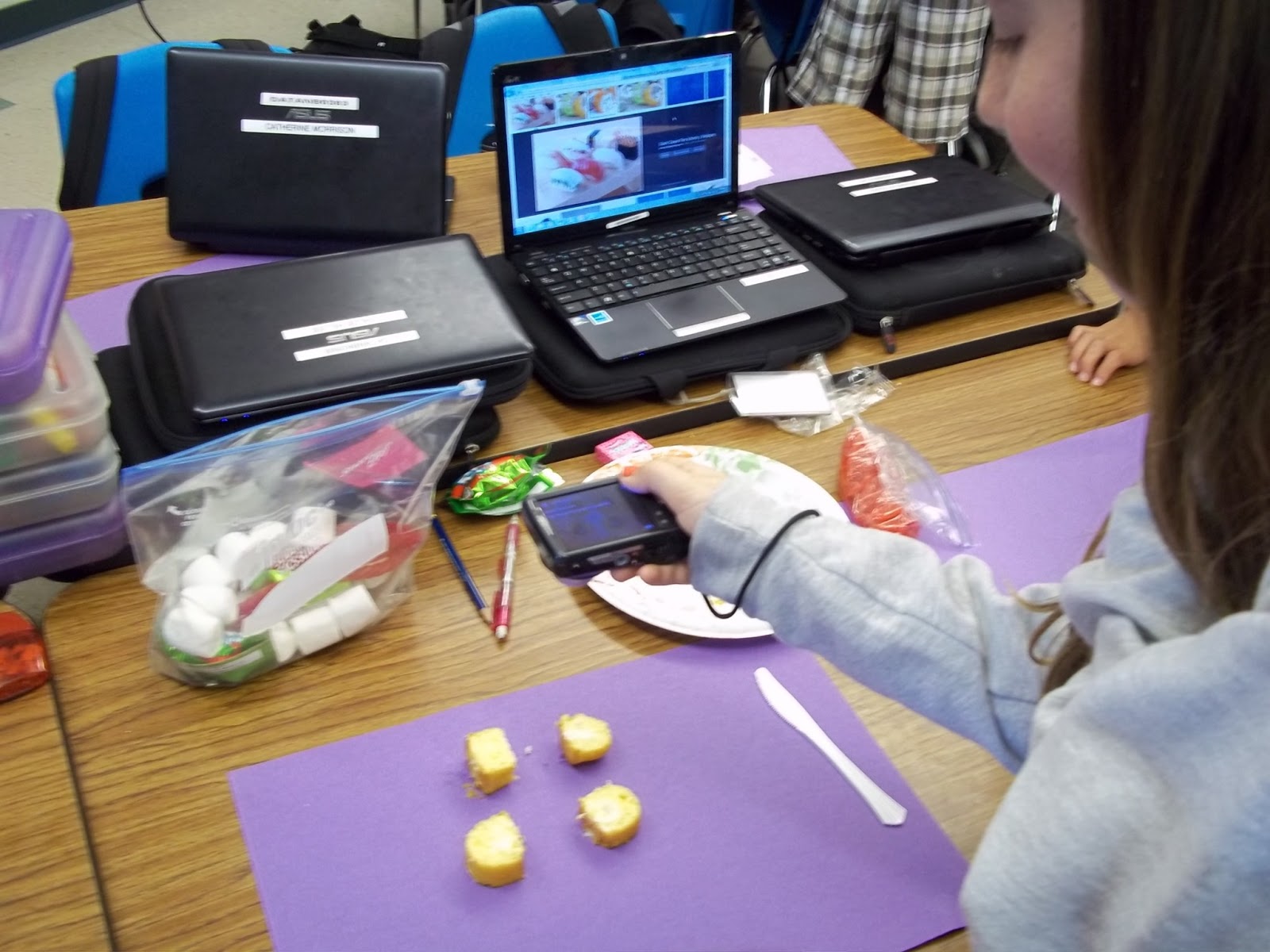
- Use their electronic camera (e-cam) on their netbooks to take photos of each step.
- Create a PowerPoint presentation of technical directions including: Title slide, List of materials slide, Steps in order (each with a written direction and e-cam photo), Conclusion slide(s) explaining how and why Japan uses its natural resources to create sushi.
- Create an advertisement with the purpose of selling the candy sushi.
- Reflect on this activity on message boards on ThinkQuest.org (roles, what went well, what could have been improved).
- Enjoy a sweet sushi treat! :)
Enjoy seeing how students integrate technology and art in Miss Lukins's Language Arts and World Geography classes!
Sunday, March 17, 2013
Candy Sushi!
As a reward for working so diligently on the Writing CST Test, students practiced their technical direction writing and teamwork skills to work in a group to figure out how to make and teach someone else to make candy sushi! Since we are currently studying Japan's geography--specifically the effects of natural resources on the country--in World Geography and analyzing/writing technical directions in Language Arts, what a perfect way to blend the curriculum and have some sweet fun too! :) Students working in teams will:
Reminiscing about Response to Literature...
Students practiced for the BIG state Writing CST in which they show off their writing skills in one of the following writing genres: narrative, response to literature, persuasive, or summary. So, to prepare, students rehearsed their skills in response to literature writing. First, students read and annotated a Japanese folktale (Yes, keeping it cross-curricular with World Geography!), and then wrote a response to literature essay within a two-period block, practicing for the timed--yet un-timed--test (students are given extra time in one sitting if needed). Enjoy the in-depth analysis below!
Here are two examples of annotated stories and response to literature essays:

Japan Feudalism Interactive PowerPoints
Students created interactive PowerPoints of the five main levels of society in feudal Japan. Each picture on the pyramid links to a slide where that figure in society gives a first person account of his/her role, including job, description, thoughts/feelings, etc. Enjoy a couple student examples below:
Student Example #1:
Student Example #2:
Student Example #3:
Subscribe to:
Posts (Atom)